Get Started By Contacting us!
Do you require a chimney inspection or replacement? Or do you simply need one of our chimney cleaning service experts to determine if your chimney leaks somewhere—possibly from the crown?
Cracks in the crown can result in water leakages that damage components of your fireplace and chimney. Chimney Restoration of Kansas City fixes these cracks & can rebuild the crown if necessary in Lawrence, KS.
Call Chimney Restoration of Kansas City if you suspect your crown is damaged or improperly built. We can guarantee that your crown is in excellent shape and ready to safeguard your chimney for many years with our crown repair services in Douglas County. We use advanced products & methods for crown repairs, filling fractures, and creating a brand-new, smooth surface.
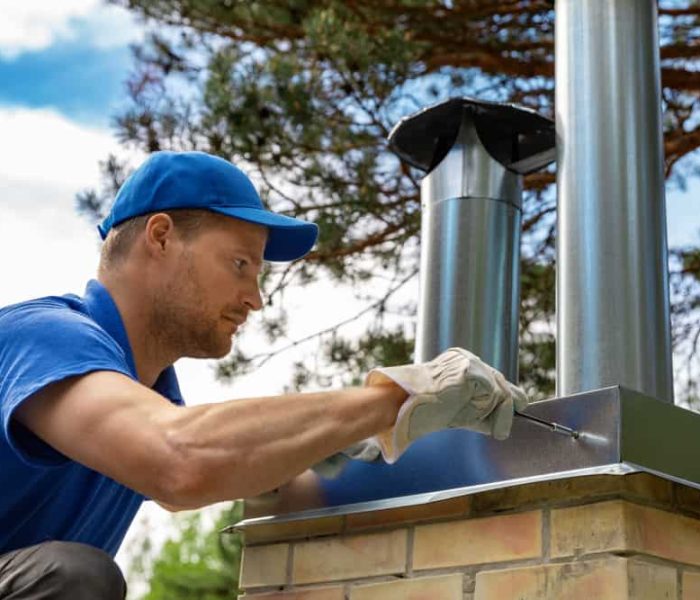
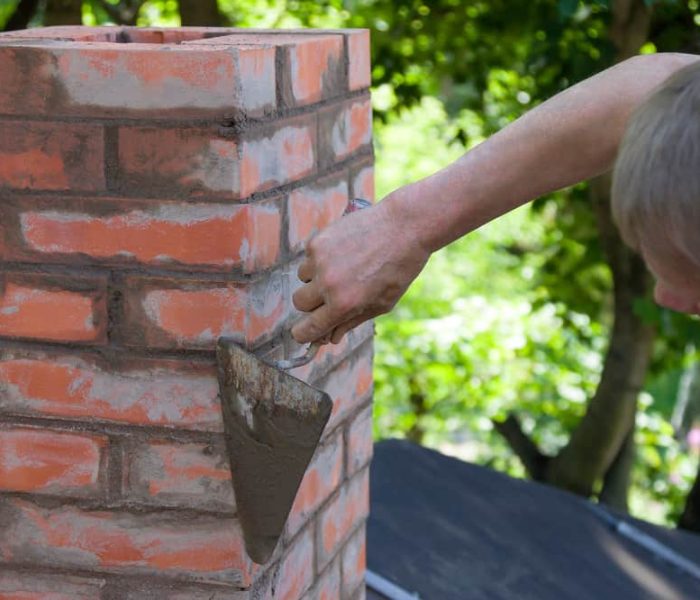
If your chimney crown was built incorrectly, the chimney sweeps at Chimney Restoration of Kansas City constructs a crown that will last for many years. However, if your crown is still in reasonably good shape and is only cracked slightly, we can undertake crown repairs using CrownSeal and CrownCoat. Cracks can be fixed with CrownSeal.
As the name suggests, the product closes the cracks and offers a flexible, waterproof barrier for additional protection. Crowns that are structurally sound but are starting to crack are applications for CrownSeal.
CrownCoat is a water-repellent coating that protects the crown and shields it from water damage in Lawrence, KS. CrownCoat is the product to use if you want to prolong the life of your crown and protect it from further damage.
If the installation is improper, your crown decays much faster as incorrect materials are used. Contractors construct chimney tops with mortar rather than concrete. This is substantially less dependable and much more prone to breaking down rapidly.
Strong winds, heavy rain, freezing temperatures, and lightning contribute to the crown’s structural weakness. Moisture destroys materials like cement, bricks, and mortar by causing them to expand and compress, which results in chipping or cracking.
When the slope is not built correctly, the roof’s pitch should match the slope of the chimney crown. Horizontal brick surfaces let the water stand and collect without dripping, as opposed to vertical surfaces. The surface of a chimney crown is horizontal with a slight inclination. This little slope needs to be constructed with care.
The chimney crown is prone to wear and strain. A chimney inspection expert may conduct an annual inspection to ensure that you can stop leaks and other issues if any cracks are found. Whether you need to replace the chimney crown or get crown repairs depends on the extent of the damage to your chimney crown in Douglas County.
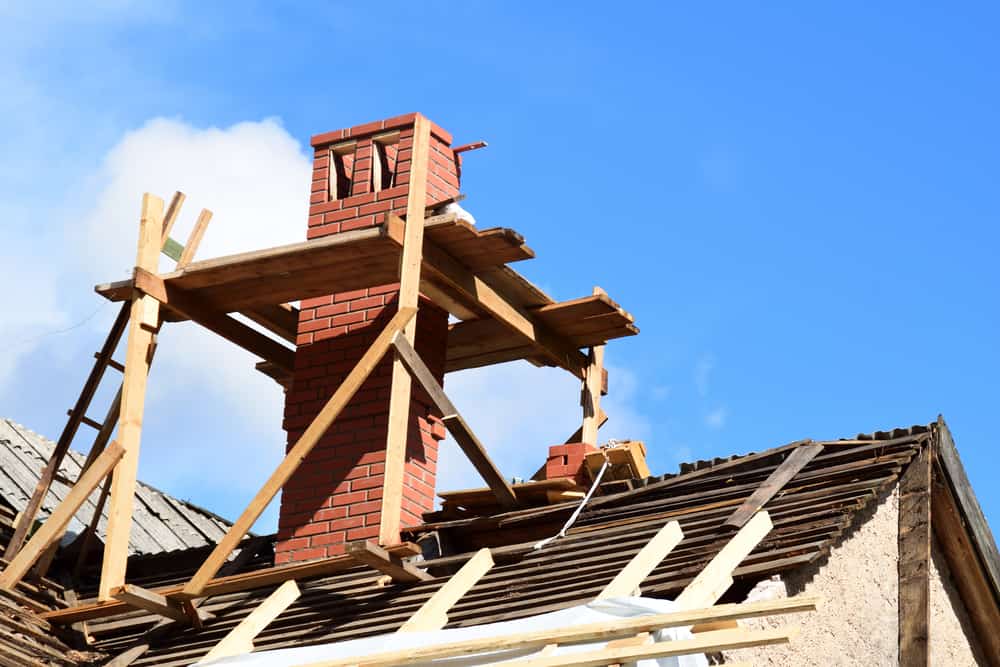
Waterproofing and spot-filling are insufficient for several types of crown damage. If there is significant damage, we can install a steel-reinforced crown or reconstruct the crown using special pre-cast concrete.
We assure you that the new crown will be constructed properly to prevent rain from running down the chimney bricks in Lawrence, KS. Our masonry chimney sweeps professionals at Chimney Restoration of Kansas City accomplish an excellent job.
When chimney crown repairs expert from Chimney Restoration of Kansas City does your crown repairs in Douglas County, we never utilize mortar-based materials.
Our well-trained fireplace cleaning professionals will fix problems correctly the first time. Our chimney sweeps in Lawrence, KS assess the problem and recommend solutions based on the assessment.
Instead, we only employ commercial-grade concrete products. Standard mortar soaks up water as it is not weather-resistant, putting you right back where you started: with a ruined chimney crown. Call 913-374-7902 to arrange for a fireplace inspection.

Lawrence is a city in and the county seat of Douglas County, Kansas, United States, and the sixth-largest city in the state. It is in the northeastern sector of the state, astride Interstate 70, between the Kansas and Wakarusa Rivers. As of the 2020 census, the population of the city was 94,934. Lawrence is a college town and the home to both the University of Kansas and Haskell Indian Nations University.
The Kaw people, also known as the Kansa, settled the region including what is now Lawrence in the late 17th or early 18th century. A series of treaties with the U.S. government compelled the Kaw to relinquish the land to the Shawnee and their Indian Reservation, established in 1830. The Kansas Territory was established in May 1854. During this period, the Oregon Trail ran parallel to the Kansas River, roughly through the area where Lawrence is now. A hill in the area, then known as Hogback Ridge and now known as Mount Oread, which sits on the separating the Kansas and Wakarusa River, was used as a landmark and outlook by those on the trail. While the territory was technically closed to settlement until 1854, there were a few “squatter settlements” in the area, especially just north of the Kansas River.
Lawrence was founded “strictly for political reasons” having to do with slavery, which was heavily debated in the United States in the early to mid-1800s. Northern Democrats, led by Senators Lewis Cass of Michigan and Stephen A. Douglas of Illinois, promoted “popular sovereignty” as a middle position on the slavery issue. Its proponents argued it was more democratic, as it allowed the citizens of newly organized territories (and not Washington, D.C. politicians) to have a direct say as to the legality of slavery in their own lands. (Meanwhile, enemies of the bill, especially in the north, derisively called this idea “squatter sovereignty”.) Douglas eventually made popular sovereignty the backbone of his Kansas-Nebraska Act-legislation that effectively repealed the Missouri Compromise of 1820 and created the territories of Kansas and Nebraska-which passed Congress in 1854.
The Christian abolitionist and Protestant minister Richard Cordley later noted that after the bill became law, “there was a feeling of despondency all over the north” because its passage “opened Kansas to [the possibility of] slavery [which many] thought [was] equivalent to making Kansas a slave state”. This was largely because nearby Missouri allowed slavery, and many rightly assumed the first settlers in Kansas Territory would come from Missouri, bringing their penchant for slavery with them.
Learn more about Lawrence.Here are some chimney-related links: